
Powering Remote Energy Security in The Heart of Australia

In one of the most isolated and environmentally challenging regions in Australia, a new hybrid microgrid power station is transforming energy security for the remote South Australian community of Oodnadatta.
Located more than 1,000 kilometres north of Adelaide on the edge of the Simpson Desert, Oodnadatta is renowned for its extreme temperatures, harsh operating conditions and logistical remoteness.
Known as one of the hottest places on the planet, temperatures regularly climb above 45°C during summer (60°C on-ground), placing enormous pressure on critical infrastructure and the communities that rely upon it.
For the town’s residents, businesses and essential services, dependable power generation is not simply about convenience, it is fundamental to daily life.
From refrigeration and fuel supply through to healthcare, education and emergency response services, uninterrupted energy supply underpins the viability of the entire community.

Power on
Commissioned by the Department for Energy and Mining (DEM) South Australia, the project was delivered in partnership by Adeliade-based Isuzu Power Solutions (IPS) dealers, All Gen Solutions and Apex Energy Australia.
The hybrid microgrid combines solar, battery and diesel generation technologies, with multiple IPS units forming the backbone of the system’s dependable standby and dispatchable power generation capability.
At the centre of the project are three 200 kW diesel power units powered by Isuzu’s proven 6UZ1 engine platform, integrated into a sophisticated hybrid microgrid designed and constructed by South Australian-based remote power specialist, All Gen Solutions.

According to All Gen Solutions Director, Adam Lilleycrap, the project represents a significant step forward in the evolution of remote community power generation across Australia.
“We specialise in remote off-grid power solutions,” said Adam.
“Typically, diesel was always the starting point, but with changing environmental requirements and changing community expectations, we’re now integrating solar and battery technologies into hybrid microgrids to reduce reliance on diesel while improving security of supply.”
Adam has spent more than two decades working across remote power generation projects throughout Australia and the Pacific, with All Gen now delivering infrastructure across South Australia, Western Australia, the Northern Territory, Queensland, Papua New Guinea and the Pacific Islands.

Really remote power
The Oodnadatta project reflects the growing demand for resilient, lower-emissions energy systems capable of supporting remote communities where traditional grid infrastructure is either unavailable or impractical.
The hybrid microgrid now incorporates approximately 450 kW of solar PV generation, a 500 kW/ 1.2 MWh battery energy storage system (BESS), and the trio of Isuzu-powered diesel generators, all integrated through advanced ComAp microgrid software, which coordinates and balances traditional and renewable energy storage.
During daylight hours, the solar and battery infrastructure carries the majority of the township’s energy demand, dramatically reducing diesel consumption while preserving the dispatchable reliability only diesel generation can provide during periods of peak demand, cloud cover or adverse weather conditions.

Power security
According to Adam, the system is now substituting approximately 75 to 80 per cent of the community’s energy requirements through renewable energy generation.
“What this project has done is create significantly more security in power supply for the community while taking away a large amount of reliance on diesel,” he said.
“With diesel pricing and fuel availability becoming increasingly challenging in remote Australia, that’s a major gain for communities like Oodnadatta.”
The power station supplies essential infrastructure throughout the township, including the famous Pink Roadhouse, fuel supply facilities, the town school, medical clinic, police station and Royal Flying Doctor Service support infrastructure.
“In a remote town like this, everyone relies on the power station,” Adam explained.
“There’s refrigeration, communications, education services, medical services and emergency response capability all dependent on reliable power generation.”

Harsh operating conditions
Oodnadatta is widely recognised as one of the harshest operating environments in Australia, with relentless summer temperatures, airborne dust, remote logistics and long service intervals all placing extraordinary demands on power generation equipment.
For All Gen Solutions, selecting the right generation platform was critical to the success of the project.
With demonstrated experience delivering proven and dependable IPS product in isolated locations, including prime power generators at Oak Dam exploration camp near Remark and the Oak Valley Power Station in state’s remote west, the choice was simple.
“We chose Isuzu for this project based on reliability, fuel economy and overall robustness,” said Adam.
“Oodnadatta is classed as one of the hottest places on the planet, so we needed a product with the ambient capability to operate reliably in these conditions, while also delivering strong lifecycle cost performance.”

The backbone
At the core of the installation is the IPS 6UZ1 power unit, a heavy-duty 9.8-litre turbocharged and intercooled diesel engine manufactured in Japan and engineered specifically for demanding industrial applications.
Delivering a maximum rated output of 228 kW @ 1,500 RPM and continuous output of 205 kW @ 1,500 RPM the platform combines strong torque characteristics with low fuel consumption and dependable continuous-duty performance.
The 6UZ1’s common rail direct injection fuel system and water-cooled heavy-duty design were particularly important for the Oodnadatta application, where maintaining reliable operation during sustained high ambient temperatures was essential.
The project’s three 6UZ1 bespoke base generators were packaged and assembled to brief by the IPS product development team in Melbourne before being housed in custom enclosures.
They were then shipped to All Gen’s head office location in Roseworthy where the team completed a full-scale, on-site mock-up of the micro-grid for testing and evaluation.
“We assembled the entire set-up at our head office location to ensure every element was thoroughly verified and proven in-situ,” Adam recalled.
“From there, the set-up was broken down, packed-up and trucked to site in Oodnadatta.”

Built smart
To withstand the punishing desert environment, the IPS specification incorporates high-capacity cooling systems rated for ambient temperatures exceeding 50°C and heavy-duty dual-element air filtration systems.
Integrated remote monitoring capability and IP65-rated engine management protection systems (completely dust-tight) further strengthen the platform’s suitability for isolated locations, allowing operators to maintain visibility over system performance despite the vast distances involved.
For remote communities where maintenance access may involve hours of off-road travel and where downtime can directly affect essential services, these engineering factors play a critical role in long-term reliability.
“The latest common rail technology gives much better fuel efficiency, better reliability and overall performance compared to older-generation power station equipment,” Adam said.
“The previous power station here had been operating for around 40 years. It had reached the point where reliability and maintainability were becoming major concerns.”

From the ground up
Beyond the generation hardware itself, the Oodnadatta project required extensive engineering and systems integration work to ensure reliable operation under remote desert conditions.
All Gen undertook the detailed engineering design, controls integration, construction and commissioning of the microgrid system, while partners Apex Energy Australia supplied the solar and battery infrastructure.
According to Adam, integrating multiple energy technologies into a seamless operating platform was one of the defining challenges of the project.
“The engineering work required to make this project function as a complete microgrid was fairly significant,” he said.
“The generators were custom packaged into the enclosures, and then integrated with the solar, battery and power distribution systems through a sophisticated control solution.
“There was a lot of engineering involved in designing all the controls, building the control panels and integrating everything into a single system that works seamlessly.”

Plug and play
Additional infrastructure was incorporated into the site design to improve durability and thermal management, including custom protective structures designed to shield equipment from direct sun exposure and assist cooling performance during extreme heat events.
The entire project was delivered as a turnkey solution incorporating civil works, fencing, installation, commissioning and systems integration.
“We actually did all the civil work, fencing and everything here as a turnkey solution,” Adam said.
“It was a large collaborative effort between multiple stakeholders, but it all came together really well.”
From initial project tendering through to final commissioning, the development process spanned 18 months.
“This type of project involves detailed design, procurement, construction and commissioning phases,” he said.
“But the result has been outstanding. The system has now been operating for around 12 months and overall reliability has been flawless.”

Reliability is king
In remote Australia, power outages can have immediate consequences for public safety, communications, food security and healthcare delivery.
For this reason, operational reliability remains the defining metric for remote power infrastructure.
According to Adam, the hybrid microgrid has performed exceptionally well since commissioning.
“There have only been some very minor outages, generally related to weather or line events rather than the power station itself,” he said.
Reducing diesel runtime through solar and battery integration has also lowered servicing requirements and operational burden, an important consideration when maintenance personnel may be operating thousands of kilometres from support networks.
The generators undergo routine oil and filter servicing every 500 operating hours, alongside quarterly preventative maintenance inspections covering electrical systems, alternators, control systems, battery performance and solar infrastructure.
Because renewable generation is now bearing most of the township’s energy demand, engine operating hours and fuel consumption have both been substantially reduced, improving overall operational efficiency and long-term lifecycle costs.

Strong support network
Alongside performance, Adam highlighted the importance of technical collaboration and aftermarket support in delivering successful remote power projects.
“The support from the team at Isuzu Power Solutions has been fantastic,” he said.
“We had previously been using another engine platform that became difficult to source, so we reached out to the Isuzu team to discuss available products and suitable applications.
“We had several projects coming through the pipeline, and we worked together to bring the right product into the market for our clients.
“From a technical support perspective and from a sales and project delivery point of view, the entire experience with Isuzu has been excellent.”
For Isuzu Power Solutions, the Oodnadatta project demonstrates the continuing importance of reliable hybrid-ready diesel technology within Australia’s evolving remote energy landscape.
While renewable energy technologies continue to play an increasingly important role in regional power systems, dependable diesel generation remains essential for energy security, system stability and operational redundancy, particularly in isolated locations like central Australia.
Best of both worlds
Projects such as Oodnadatta highlight how advanced diesel technology, integrated with renewable energy and battery storage, can deliver meaningful reductions in fuel consumption and emissions without compromising reliability.
For remote communities operating far beyond the reach of traditional grid infrastructure, that balance remains critical.
And in one of the harshest environments in the country, IPS continues to deliver the dependable power generation capability helping keep communities connected, operational and secure.

Isuzu’s latest fleet of factory-built tippers has arrived, and they all have 3 years’ free servicing tipped in. From the compact NKR, through the ingenious Tri-Tipper, to the mighty FRR. There’s never been a better time to get into an Isuzu Tipper. Offer only for a strictly limited time, see your nearest Isuzu truck dealer today.
Learn More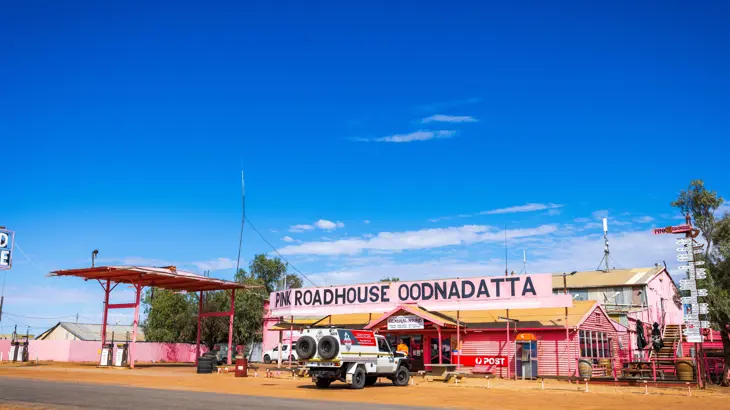


Subscribe
Want all the latest Isuzu news?
Stay up to date with the latest on Isuzu and dealerships near you.