
Beginner’s Guide to Buying a Truck In 2026

Buying a truck is a significant business decision, both financially and in terms of your operations.
Australia has about 667,100 registered rigid trucks and 128,600 articulated trucks, according to the most recent Bureau of Infrastructure and Transport Research Economics (BITRE) stats.
That scale reflects how many different tasks Aussie trucks perform, from local deliveries and trade work, to construction, waste and regional freight movements.
When looking to buy, the best place to start is the job itself, rather than a particular model.
A well-specified truck should carry the required load legally, suit its routes and worksites, support the driver and remain efficient to operate over its working life.
1. Define the work
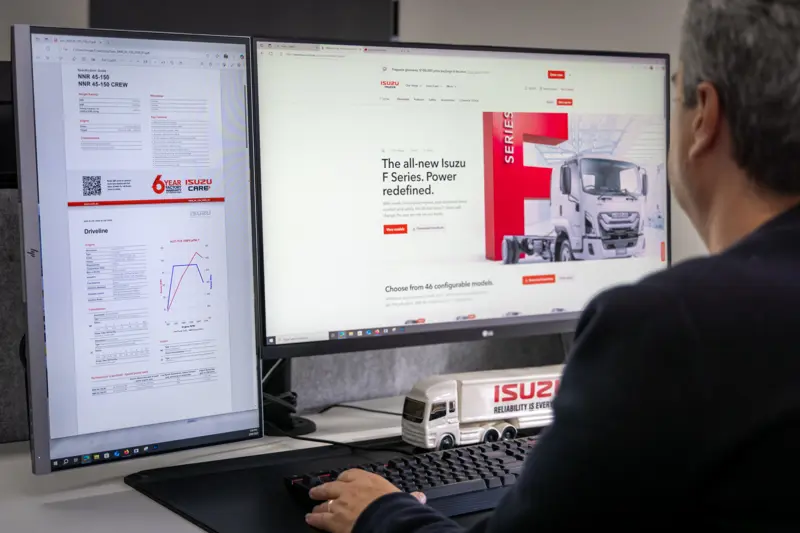
Write a simple profile before looking at specifications or features.
Work out what the truck is likely to carry, the maximum realistic load, how often it will run fully loaded, rough daily kilometres, road types, gradients, stop-start work, site access, parking constraints and the number of occupants. Include any towing, power take-off (PTO) or equipment needs too.
Pay close attention to payload.
Payload is affected by the weight of the cab-chassis, body, fuel, occupants, accessories and equipment. A body fitment that is too large or heavy can leave less legal carrying capacity than expected. Allow for future changes in your business but avoid specifying extra size or capacity that adds cost without a clear operational benefit.

2. Build a short list
Turn the profile into three columns… ‘must have’, ‘preferred’ and ‘optional.’
Your must-haves should include gross vehicle mass (GVM), usable payload, body dimensions, turning circle, transmission type, safety features, driver-licence class and access to parts and servicing. This approach makes discussions with a truck dealer, body builder, finance provider and insurer far more focused.
Check the licence rules in the state or territory where the truck will operate. Also, confirm applicable mass, dimension, loading and load-restraint requirements for your task. If the vehicle is used for business, responsibilities under heavy vehicle law may extend beyond the driver to people who schedule, load, manage or maintain the truck.
3. Evidence based research
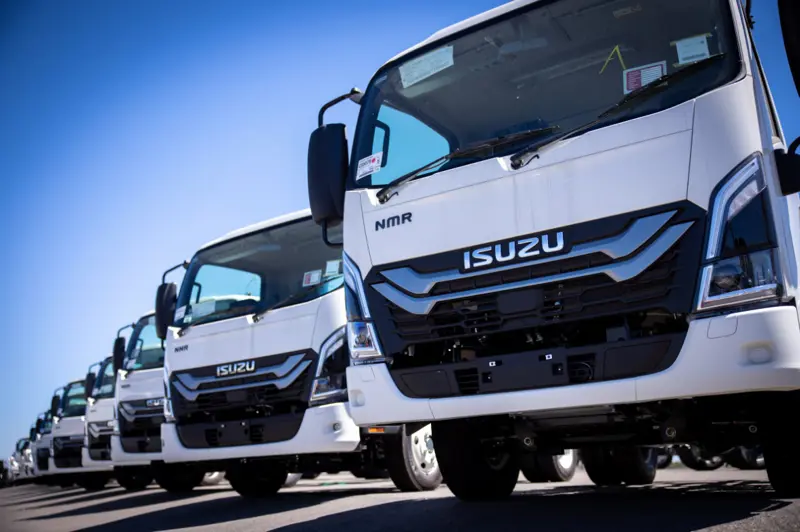
Whilst extremely useful, print and online journalist reviews are only one input.
Develop a simple comparison sheet and record the source. Compare published specifications, body-builder information, warranty terms, service intervals, parts and service coverage, safety systems, delivery timing and any conditions attached to a quote.
If possible, speak with operators who do similar work, not only people who own a similar-sized truck. This is super helpful.
Ask them what they carry, where they drive, what causes downtime and what they would specify differently if they had their time again. It can also be useful to involve the people who will drive, load, schedule and service the vehicle. Their observations can reveal issues that a brochure or online search won’t cover.
4. Whole-of-life costs matter
The sticker price is only part of the decision.
Estimate finance or lease costs, fuel (or energy), registration, insurance, scheduled servicing, tyres, replacement parts, downtime, body and accessory costs, and likely resale value over a realistic ownership period.
Use the same annual distance, fuel price, finance assumptions and replacement timing for every option, so the comparison is an ‘apples for apples’ analysis.

5. Validate the complete truck
A truck is a working system, so assess the cab-chassis, body, accessories and load-restraint solution together.
Confirm axle loads, finished tare, usable payload, overall dimensions, body mounting, electrical requirements and access for servicing.
Where possible, arrange a demonstration or test drive that resembles the real task. Check visibility, cab access, seating position, controls, low-speed manoeuvrability, take-off and braking feel as well as the ease of loading and unloading.
A driver who is comfortable and confident is better placed to operate safely and consistently.

Questions to ask the dealer
What payload will the completed truck provide, based on the proposed body and accessories?
Which licence class, GVM and axle limits apply?
Will the engine, transmission and gearing suit the terrain and load?
Which safety and driver-assistance features are included?
What are the body-build process, lead time and sign-off responsibilities?
What are the warranty terms, service intervals and maintenance requirements?
Can you provide a whole-of-life cost estimate using my operating theories?
Keep an open mind
Good research should narrow the field without locking you in too early.
Incorporate your profile, requirements list and cost comparison into the conversation, then test the dealer recommendation against the job.
The right truck is the unit that’s complete specification fits your task, the people and the budget, with evidence to support the decision.
Looking to buy and want to know more? Check out Isuzu’s comprehensive Truck Buyer’s Guide here.
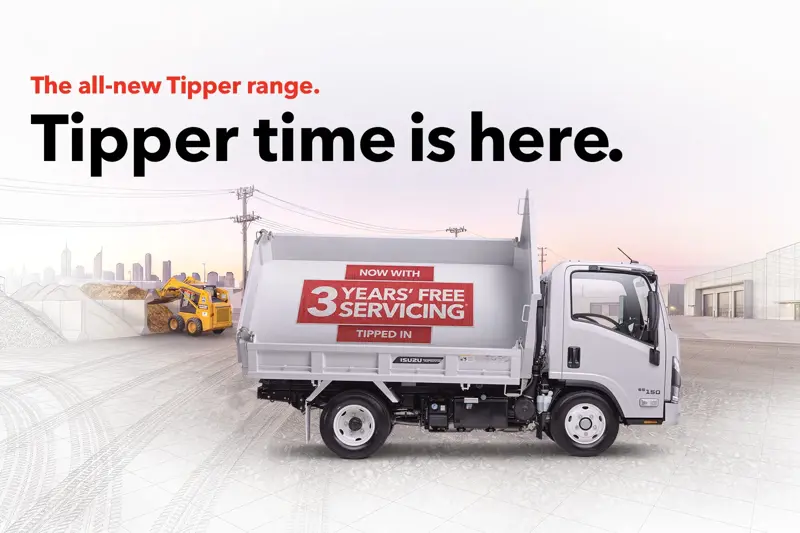
Isuzu’s latest fleet of factory-built tippers has arrived, and they all have 3 years’ free servicing tipped in. From the compact NKR, through the ingenious Tri-Tipper, to the mighty FRR. There’s never been a better time to get into an Isuzu Tipper. Offer only for a strictly limited time, see your nearest Isuzu truck dealer today.
Learn More

Subscribe
Want all the latest Isuzu news?
Stay up to date with the latest on Isuzu and dealerships near you.