
Are Utes Costing Your Business More Than You Think?

Top 5 reasons businesses are rethinking their go-to workhorse
For decades, the ute has been the undisputed backbone of Australian trades. From suburban job sites to regional worksites, it’s been the default choice for moving tools, materials and crews.
But as workloads evolve and expectations rise, many businesses are starting to question whether the traditional ute is still truly fit for purpose.
Across the country, a growing number of operators are reassessing what they actually need from a work vehicle. The result? A noticeable shift toward more capable, purpose-built alternatives.
Here are five key reasons why Aussie trades are shying away from the ute.

1. Payload limits are holding businesses back
At first glance, a ute seems capable enough. But once you factor in tools, equipment, materials and crew, payload capacity quickly becomes a constraint.
As businesses grow, so too does the weight they need to carry. Many operators find themselves maxing out their vehicle well before the day’s work is done.
Light trucks, by comparison, offer significantly higher payload capacity and improved weight distribution, allowing operators to carry more in a single trip.
That added capacity doesn’t just improve efficiency, it reduces the need for multiple runs, saving both time and fuel across the working week.

2. Space is no longer a luxury, it’s a necessity
Modern trades are carting around more weight than ever before. Tools are more varied, jobs more complex, and customer expectations demand a higher level of preparedness.
The typical ute tray or tub can only go so far. Overflow often means trailers, awkward loading, or leaving essential gear on site with fingers crossed.
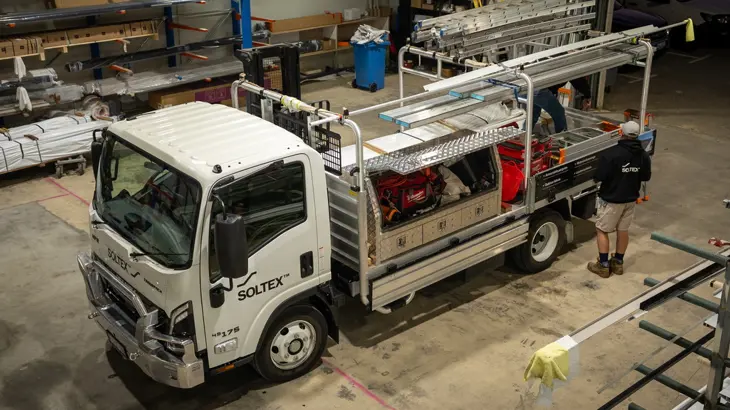
Purpose-built work vehicles provide larger, more versatile load areas along with integrated storage solutions designed for real-world use.
This translates to better organisation, safe storage, quicker access to equipment, and fewer compromises on-site.

3. Productivity starts before you hit the road
One of the biggest hidden costs in running a ute is what happens after purchase. Fitting out a cab chassis with trays, toolboxes or specialised bodies takes time and money.
For many businesses, that means delays before the vehicle is even job-ready.
Pre-configured, ready-to-work solutions eliminate this step entirely. Factory-built bodies designed for specific trades allow operators to get straight to work without the aftermarket headache.
The benefit is immediate: faster deployment, simplified purchasing decisions and less downtime between buying a vehicle and putting it to use.

4. Efficiency is now a business priority
Margins are tighter, competition is stronger, and downtime is more costly than ever. Businesses are under pressure to get more done in less time.
That’s where vehicle capability becomes a strategic decision rather than just a purchase.
With greater payload, improved layout and fewer limitations, higher-capacity work vehicles enable operators to complete jobs more efficiently.
In practical terms, that could mean fewer trips to suppliers, less reliance on cumbersome trailers, and more time spent on actual billable work.

5. The gap has closed
Historically, moving from a ute to a truck meant sacrificing convenience and comfort. Larger vehicles like trucks were harder to drive, required special licences, and weren’t suited to urban environments.
That’s no longer the case.
Modern light-duty trucks combine compact dimensions and tight turning circles with the capability of a larger vehicle, making them well suited to city streets and confined worksites.
Many models can also be driven on a standard car licence, removing one of the biggest perceived barriers to entry. The result is what many operators describe as ‘the best of both worlds,’ car-like drivability with genuine worksite capability.

Rethinking the role
The ute still has its place. For lighter duties or smaller operations, it remains a practical option.
But for businesses looking to scale, improve efficiency and maximise productivity, the limitations are becoming harder to ignore.
The shift isn’t about abandoning tradition, it’s about aligning equipment with the realities of modern trade work as it changes over time.
As demands increase and expectations continue to evolve, more Aussie businesses are recognising that the right vehicle isn’t just transport but a tool that directly impacts performance, profitability and growth.
And for many, that realisation is driving a move beyond the ute.
Australia’s road freight network continues to rely heavily on commercial vehicles. Find out why and which vehicles do the heavy lifting.
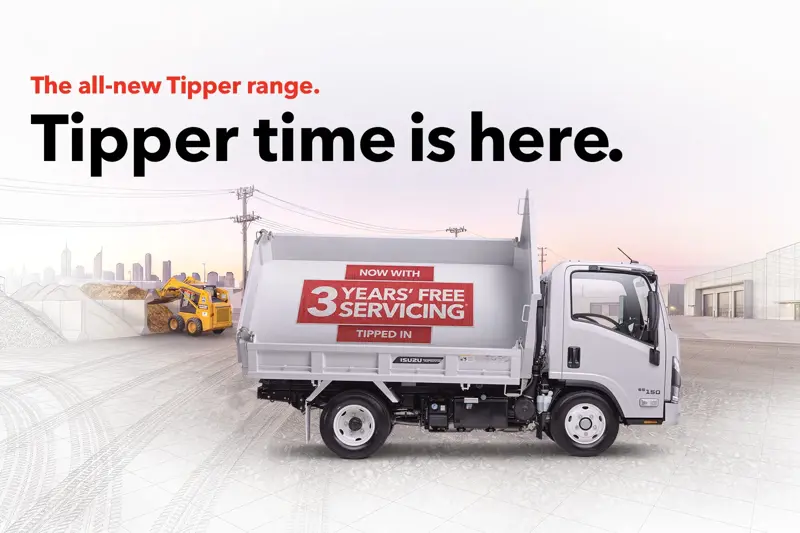
Isuzu’s latest fleet of factory-built tippers has arrived, and they all have 3 years’ free servicing tipped in. From the compact NKR, through the ingenious Tri-Tipper, to the mighty FRR. There’s never been a better time to get into an Isuzu Tipper. Offer only for a strictly limited time, see your nearest Isuzu truck dealer today.
Learn More

Subscribe
Want all the latest Isuzu news?
Stay up to date with the latest on Isuzu and dealerships near you.